
The human body is a complex organization built through multiple levels of structure. From large body systems to tiny anatomical details, each part has a specific role and connects with other parts to maintain normal functions.
For medical students and educators, understanding these relationships is an important step in developing accurate anatomical knowledge. The hierarchical structure of anatomy provides a clear way to explore how different levels of the human body are arranged and connected, helping learners better understand the relationship between structures and their functions.
From Body Systems to Microscopic Details: How Anatomy Is Organized
Human anatomy is commonly understood through different structural levels. The largest level includes body systems, such as the nervous system, cardiovascular system, and digestive system. Each system contains organs that work together to perform specific functions. Learning anatomy from this perspective helps students first understand the overall organization of the body.
Below the organ level are tissues, which are groups of similar cells that perform particular tasks. For example, muscle tissue supports movement, while nervous tissue helps transmit signals. Cells form the foundation of tissues, and their structures influence how organs operate.
The connection between these levels creates a complete anatomical picture. A change at one level may affect other levels because the human body functions as an integrated structure. This approach allows learners to move from general concepts to more detailed observations.
In medical education, this learning process helps students avoid viewing organs as isolated parts. Instead, they can understand how structures interact within larger systems. This way of thinking supports deeper anatomical knowledge before entering clinical practice.
Why Anatomical Hierarchy Matters in Medical Learning
Traditional anatomy education often begins with textbooks, illustrations, and physical models. These resources provide important information, but some learners may find it difficult to visualize the three-dimensional relationships between structures. Understanding spatial connections is especially important when studying complex areas such as the brain, blood vessels, and internal organs.
The hierarchical structure of anatomy helps students build knowledge step by step. They can first identify major systems, then explore organs, tissues, and detailed structures. This learning method follows the natural organization of the body and makes complicated information easier to understand.
Modern medical education is also placing more emphasis on interactive learning. Students need opportunities to observe structures from different perspectives and connect two-dimensional images with three-dimensional forms. Digital tools provide additional ways to explore anatomy beyond traditional teaching methods.
At DIGIHUMAN, we focus on supporting medical education through digital anatomy solutions that help educators present anatomical information in a more interactive format. Our approach combines anatomical knowledge with visualization technology to create learning environments that support different teaching needs.
Connecting Anatomical Knowledge With Digital Visualization
Digital anatomy technology changes how learners interact with human structures. Instead of only viewing fixed images, students can explore anatomical models by adjusting views, examining layers, and observing relationships between different structures.
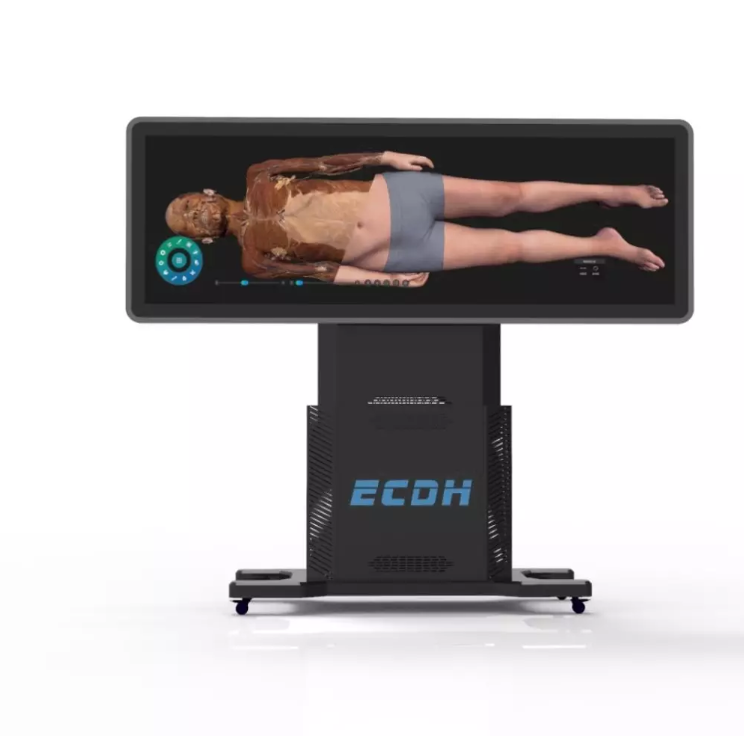
The HD Digihuman Virtual Anatomage Table is designed for this type of learning environment. It uses reconstructed real human body data and presents anatomical structures in three dimensions. Users can zoom in, zoom out, and rotate structures from different angles, helping them observe connections between body parts.
The system also includes CT and MRI image resources with sequence image browsing functions. These features allow learners to compare medical imaging information with anatomical structures. Each case can include information such as basic details, imaging findings, and imaging diagnosis, providing additional learning references.
Through interactive functions, anatomical structures can be hidden, displayed separately, marked, or adjusted for observation. These options allow teachers to create different teaching approaches based on course requirements. The system supports multiple user accounts and customized selections for classroom management.
Supporting Modern Anatomy Education With Digital Solutions
As medical education continues to develop, combining traditional knowledge with digital technology has become an important direction. Digital anatomy does not replace fundamental anatomical learning. Instead, it provides another method for students to understand spatial relationships and structural details.
Our HD Digihuman Virtual Anatomage Table includes an 88-inch display with 3840×1080 resolution and supports infrared touch interaction. The screen can be adjusted vertically and tilted according to different teaching environments. The system also has CE and FCC certifications for its application in educational settings.
At DIGIHUMAN, we continue to explore how technology can support anatomy education. By presenting structures in a more visual and interactive way, digital solutions can help teachers explain complex concepts and help students develop clearer anatomical understanding.
Building a Clearer Understanding of Human Structures
The human body is organized through connected levels, from systems and organs to tissues and smaller structures. Learning these relationships creates a stronger foundation for medical knowledge and helps students understand how the body works as a whole.
The hierarchical structure of anatomy offers a practical framework for exploring human structures in an organized way. With the development of digital learning methods, anatomy education can provide more opportunities for observation, interaction, and deeper understanding. Through solutions such as our virtual anatomy technology, DIGIHUMAN supports educators and institutions in creating more flexible approaches to anatomical learning.

MEDICA 2026 in Germany: What Medical Training Technology Looks Like This Year
Medical schools are being asked to train more people than they can teach. The World Health Organization's first annual health...

What Is Augmented Reality Medical Training
Medical schools have a quiet math problem. A class of thirty students often shares a single cadaver, and the numbers...

Virtual Human Project CT Scan: How Digital Human Models Support Modern Anatomy Education
Medical anatomy education is changing with the development of digital technology and medical imaging. For many years, students mainly learned...