
When we study animal anatomy, one of the simplest questions can lead to a surprisingly interesting discussion: what is the largest organ in the rat’s anatomy? The answer depends slightly on what we mean by “largest.” If we are talking about the largest organ overall, the answer is the skin. If we are limiting the question to internal organs, the liver is the largest.
We find this distinction useful because it shows how anatomy should be understood in context rather than through isolated facts. Rats are widely used in biomedical research, and understanding their normal anatomy is important when interpreting physiological, pathological, and toxicological findings.
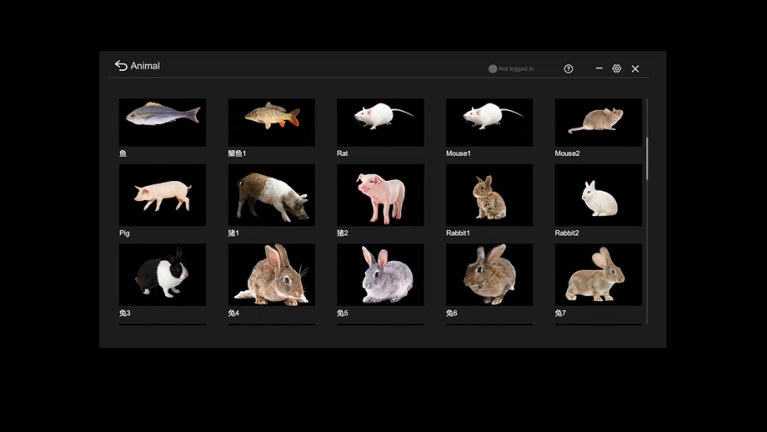
What Is the Largest Organ in the Rat‘s Anatomy: The Skin
So, what is the largest organ in the rat‘s anatomy when the entire body is considered? The answer is the skin, which forms the body’s external covering and acts as an important interface between the animal and its environment.
Research on rat and mouse integument describes the integument as the largest organ and emphasizes its barrier function against environmental chemical, physical, and microbiological factors. The skin is not simply an outer covering. It consists primarily of the epidermis and dermis, along with associated appendages such as hair follicles and glands. The underlying subcutaneous tissue supports and connects the skin to deeper structures.
This complexity becomes particularly interesting in rats. Their skin contains specialized structures associated with hair and sensory functions. For example, rat vibrissae, commonly known as whiskers, are associated with specialized follicle-sinus complexes that function as important sensory structures.
The skin also contributes to protection, fluid balance, immune defense, sensation, and other physiological processes. In mammals, these functions make the integumentary system much more than a passive external layer.
Why Is the Rat Liver Often Called the Largest Internal Organ?
The answer changes when we focus only on internal organs. In that context, the liver is generally recognized as the largest internal organ in the rat.
The rat liver has several important metabolic and physiological roles. According to the U.S. National Toxicology Program’s Rodent Ultrastructure Atlas, the liver produces circulating proteins, secretes bile, stores metabolic reserves such as glycogen and lipids, participates in detoxification, and metabolizes numerous substances.
Rat liver anatomy also has an interesting feature that distinguishes it from human anatomy: rats do not have a gallbladder. Instead, bile produced by the liver is transported through the biliary system.
For students learning comparative anatomy, this is an excellent reminder that an anatomical structure should not automatically be assumed to be identical across species. Similar organs can have different configurations, proportions, and physiological characteristics.
Why Does Understanding Rat Anatomy Matter?
For us, learning rat anatomy is not only about memorizing which organ is largest. Anatomical knowledge provides the foundation for understanding how structures relate to one another.
The rat is an important experimental animal, particularly in biomedical and toxicological research. Detailed knowledge of organs and tissues helps researchers recognize normal anatomical structures and distinguish them from changes associated with disease, treatment, or experimental exposure.
The skin is particularly relevant in toxicology because it can be directly exposed to chemicals and other environmental agents. Research on rodent integument emphasizes that species-specific differences should be considered when evaluating skin morphology and related findings.
The liver is equally important because of its central role in metabolism and detoxification. Changes in liver structure or function can therefore be highly significant when researchers evaluate the effects of drugs, chemicals, or disease processes.
How Digital Anatomy Can Support Learning
We believe that anatomy education becomes more effective when learners can connect terminology with spatial relationships. Instead of viewing an organ as an isolated illustration, students can benefit from exploring how structures are positioned relative to surrounding tissues.
This is one reason we at DIGIHUMAN focus on digital approaches to anatomy education. Our virtual anatomy solutions use interactive three-dimensional visualization to help users explore anatomical structures from different perspectives. The DIGIHUMAN Virtual Anatomy Table, for example, organizes anatomy into systematic, regional, and sectional approaches and provides more than 6,000 three-dimensional anatomical structures, along with dissection videos, anatomy animations, and assessment resources.
For anatomy learners, this type of visualization can make it easier to understand relationships between organs, tissues, and anatomical regions. It also allows structures to be examined repeatedly without depending on a single physical specimen.
From Rat Anatomy to Broader Anatomical Education
Returning to our original question, what is the largest organ in the rats anatomy? The most accurate answer is the skin when considering the body as a whole. When discussing internal organs, the liver is the key answer. Recognizing this distinction prevents a common ambiguity in anatomy questions.
For us, the larger lesson is that anatomy is best understood through structure, function, and spatial relationships together. Digital visualization can complement traditional teaching by giving learners opportunities to explore these relationships interactively.
Through DIGIHUMAN, we provide digital anatomy education solutions designed to support medical teaching and practical learning. Our DIGIHUMAN Virtual Anatomy Table is part of this broader approach, helping educators and learners visualize complex anatomical structures in an interactive digital environment.

How Are Human and Rat Anatomy Similar?
When we study anatomy, one of the most interesting questions we encounter is how are human and rat anatomy similar?...

What Is Fish Anatomy? A Simple Guide to How Fish Are Built and How They Survive
When we look at a fish swimming through water, its streamlined body may seem simple. However, beneath the scales and...

What Does an MRI Scan Show on a Dog?
When pet owners hear that a dog may need an MRI, one of the first questions they often ask is: what...