
Anatomy tables are foundational fixtures in medical education, surgical training, and scientific research. Depending on an institution’s curriculum and budget, these units generally fall into two distinct categories: traditional stainless steel dissection tables and cutting-edge virtual anatomy tables.
Understanding the price range and cost drivers for each type is essential for universities, research labs, and medical centers evaluating procurement options. This article explores the price spectrum of both traditional and digital anatomy tables and outlines the primary factors that dictate their total cost.
Traditional Stainless Steel Anatomy Table Prices
The cost of a traditional stainless steel dissection table typically ranges between $3,000 and $10,000 for standard models, though several key factors can significantly influence the final procurement price. At the baseline, material quality plays a central role; choosing premium high-grade stainless steel, such as 316-grade over standard 304-grade, commands a higher price due to its superior resistance to chemical corrosion and fluid breakdown.
Additionally, integrated accessories and ergonomic features quickly add to the baseline expense, as entry-level models offer simple flat surfaces, whereas advanced units include heavy-duty lockable casters, integrated fluid drainage troughs, side storage drawers, or removable stainless steel top covers. For institutions requiring tailored solutions, custom-engineered tables featuring specialized dimensions, motorized elevation systems, or integrated downdraft ventilation hoods frequently exceed the $10,000 mark.
Finally, broader market variables—such as regional distributor markups, vendor pricing structures, and bulk purchasing discounts—further account for fluctuations within this price spectrum.
Virtual Anatomy Table Prices and Cost Drivers
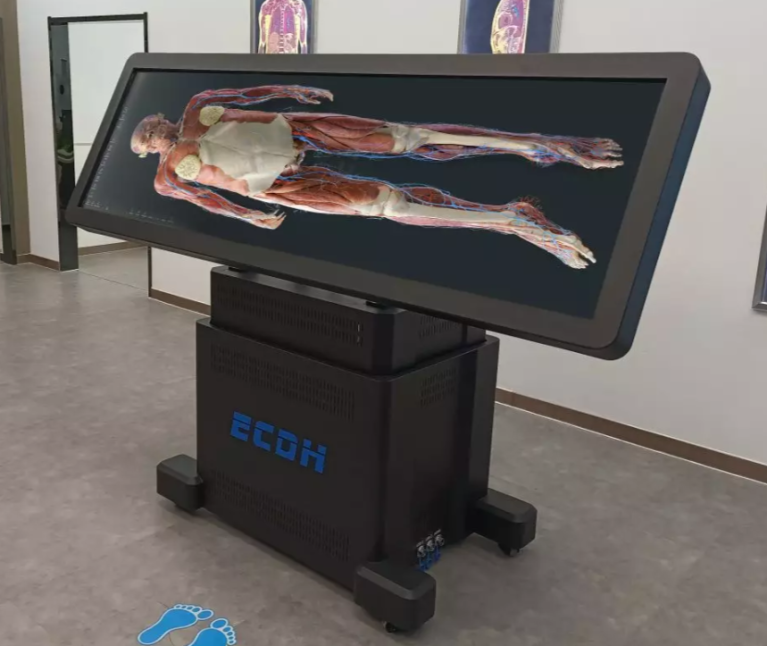
Virtual dissection tables represent a significantly higher initial investment than traditional equipment, driven primarily by advanced hardware specifications, sub-millimeter dataset acquisition, and substantial software engineering costs. The baseline expense is established by the hardware architecture itself, which incorporates high-resolution 4K multi-touch displays, multi-angle motorized lifting and tilting chassis, workstation-grade processors, and high-VRAM graphics processing units capable of rendering massive volumetric files without latency.
Beyond physical components, software research and development accounts for the largest portion of the overall price tag. Acquiring high-precision real human cadaveric scan data, engineering real-time 3D cross-sectional rendering engines, and continually maintaining proprietary educational software require extensive medical expertise, technical engineering, and continuous clinical validation.
Due to these sophisticated technological requirements, market prices for premium virtual anatomy tables generally range between $70,000 and $90,000. For instance, tables from California-based Anatomage typically fall between $72,000 and $90,000 depending on the specific model tier and bundled software modules, while China-based Digihuman provides ultra-high-resolution male and female datasets alongside complete 3D interactive software at a highly competitive price point between $70,000 and $80,000.
How to Choose the Right Anatomy Table
Selecting the right anatomy table involves balancing physical requirements, educational goals, and long-term financial commitments.
Feature | Traditional Stainless Steel Table | Virtual Anatomy Table |
Pros | Lower initial cost; direct tactile experience with physical specimens. | Reusable and non-destructive; zero ongoing cadaver facility costs; clear multi-layer visualization. |
Cons | Requires ongoing facility maintenance, ventilation, and cadaver procurement. | Higher initial hardware investment. |
- Define Long-Term Objectives: Consider whether the equipment is for short-term lab expansion or a long-term institutional upgrade. An increasing number of medical schools are choosing virtual anatomy tables as a sustainable, long-term investment that eliminates recurring cadaver preservation expenses.
- Evaluate Total Budget & Vendor ROI: Once a anatomy table type is selected, request side-by-side quotes from multiple manufacturers to compare feature sets, dataset accuracy, and overall value.
- Verify Warranty & After-Sales Support: Digital tables rely on continuous software updates and hardware reliability. Prioritize manufacturers offering extended warranties, prompt hardware servicing, and reliable software patch agreements to mitigate future operational risks.
Cost-Effective Alternative: Digihuman Anatomy Teaching System
For institutions seeking high-quality virtual dissection capabilities on a more modest budget, manufacturers offer streamlined alternatives.
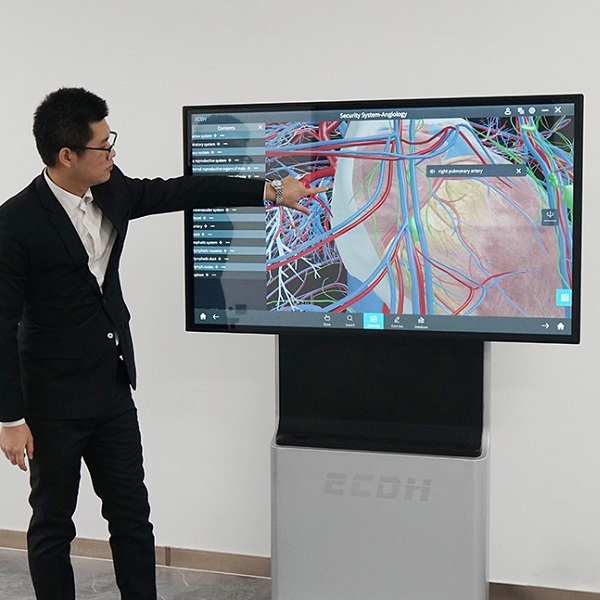
To address varying space and budget constraints, Digihuman developed the Digihuman Anatomy Teaching System Blackboard. By adjusting the display footprint—featuring a 55-inch interactive screen—and optimizing the internal hardware layout, this system significantly reduces production costs while retaining the full power of Digihuman’s proprietary 3D dissection software. It provides an accessible entry point for nursing schools, secondary education labs, and smaller training clinics without compromising on dataset accuracy.
Conclusion
Traditional tables offer hands-on physical access, modern virtual tables deliver repeatable, high-precision spatial learning that saves on recurring laboratory upkeep over time.
If you are looking for cost-effective virtual dissection tables, choose DIGIHUMAN virtual dissection tables as your worthwhile investment. The key feature of our product is the real-time rendering of ultra-high-precision anatomical data derived from tomographic sequence images. With over 17,571 cross-sections for males and 16,141 for females, all presented at 0.1mm layer thickness, this table delivers an unprecedented level of detail. With preset teaching positions and an intuitive system for marking anatomical structures, the DIGIHUMAN table is not just a tool but a full-fledged teaching aid that enhances the learning process.
DIGIHUMAN understands that each institution may have specific needs, which is why we offer customization options. Regarding shipping and delivery, we ensure that all logistics are handled efficiently and can be negotiated based on your institution’s specific needs. Our goal is to make the process as seamless as possible, ensuring your DIGIHUMAN Virtual Dissection Table arrives in perfect condition and ready for use.

MEDICA 2026 in Germany: What Medical Training Technology Looks Like This Year
Medical schools are being asked to train more people than they can teach. The World Health Organization's first annual health...

What Is Augmented Reality Medical Training
Medical schools have a quiet math problem. A class of thirty students often shares a single cadaver, and the numbers...

Hierarchical Structure of Anatomy: Understanding the Human Body From Systems to Detailed Structures
The human body is a complex organization built through multiple levels of structure. From large body systems to tiny anatomical...