
When we talk about animal health, veterinary medicine, or biological research, understanding the internal structure of the body is always the foundation. Just like human anatomy, dog anatomy provides important knowledge about how different organs, bones, muscles, and systems work together to maintain life.
At DIGIHUMAN, we focus on transforming complex anatomical information into digital and interactive learning experiences. Through digital visualization technology, we help students, educators, and researchers explore anatomical structures more clearly. In this article, we will introduce the basics of dog anatomy, including the skeletal system, organs, muscles, and why anatomical knowledge is important in veterinary science.
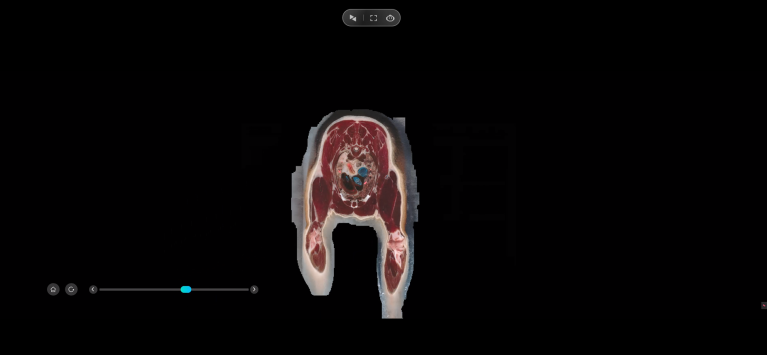
Why Is Dog Anatomy Important?
Dog anatomy is the study of the physical structure of dogs, including their bones, muscles, organs, tissues, and body systems. A detailed understanding of anatomy allows veterinarians and animal science professionals to better understand how dogs move, grow, develop diseases, and respond to treatments.
Dogs have evolved with unique physical characteristics that support their roles as hunters, companions, working animals, and service animals. Their body structure reflects their evolutionary history. For example, their strong jaw muscles, flexible spine, powerful limbs, and highly developed sense of smell are all related to their survival and daily activities.
Learning dog anatomy is not only important for veterinary diagnosis but also plays a key role in education. Veterinary students need a strong anatomical foundation before they can study surgery, pathology, imaging, or clinical treatment.
The Skeletal System in Dog Anatomy
The skeletal system is one of the most important parts of dog anatomy. A dog’s skeleton provides structural support, protects internal organs, and allows movement through connections between bones, joints, and muscles.
A typical dog skeleton includes the skull, vertebral column, ribs, limbs, and pelvic bones. The skull protects the brain and supports important sensory organs, including the eyes, ears, and nose. The vertebral column provides flexibility and protects the spinal cord, while the rib cage protects vital organs such as the heart and lungs.
Dogs also have specialized limb structures that allow them to run, jump, and walk efficiently. Their front and rear limbs contain different groups of bones and joints that work together with muscles and ligaments to create movement.
Understanding these structures helps veterinary professionals identify fractures, joint problems, and movement disorders more effectively.
Understanding Dog Muscles and Movement
Muscles are another essential component of dog anatomy. The muscular system works together with the skeleton to produce movement and maintain posture.
Dogs have strong muscle groups around their shoulders, chest, legs, and back. These muscles provide the strength needed for activities such as running, climbing, and playing. Different breeds may also have variations in muscle development due to their size, genetics, and historical purposes.
For example, working breeds often have strong muscles that support endurance and physical tasks, while smaller breeds may have different body proportions suited to their size.
By studying muscle structures, veterinary professionals can better understand injuries, rehabilitation methods, and physical conditions that affect a dog’s mobility.
Major Organ Systems in Dog Anatomy
Beyond bones and muscles, dog anatomy also includes multiple organ systems that work together to support life.
The digestive system allows dogs to process food and absorb nutrients. It includes organs such as the stomach, intestines, liver, and pancreas. The respiratory system provides oxygen through structures such as the nose, trachea, and lungs. The cardiovascular system circulates blood throughout the body through the heart and blood vessels.
The nervous system is also a critical part of anatomy. The brain, spinal cord, and nerves control movement, sensation, and many automatic body functions.
A complete understanding of these systems allows veterinary professionals to recognize how different parts of the body interact and how diseases may affect overall health.
How Digital Technology Improves Anatomy Education
Traditional anatomy education has relied heavily on physical specimens and two-dimensional images. However, these methods can sometimes present challenges, including limited availability, preservation difficulties, and restrictions in repeated observation.
We believe digital technology provides new possibilities for anatomy education. Three-dimensional visualization allows learners to explore anatomical structures from multiple angles, improving understanding and engagement.
Although our primary focus is human medical education, the concept behind digital anatomy is widely valuable. The ability to visualize complex biological structures helps learners develop stronger spatial understanding and deeper knowledge of body systems.
Our DIGIHUMAN Virtual Anatomy Table uses advanced digital technologies and anatomical datasets to support interactive learning. By combining three-dimensional models with educational functions, our solutions help medical institutions improve practical training and explore anatomy in a more flexible way.
Exploring Anatomy Through Digital Visualization
Whether studying humans or animals, anatomy provides the foundation for understanding life sciences. Dog anatomy helps veterinarians, researchers, and students understand how a dog’s body is organized and how different structures contribute to health and movement.
At DIGIHUMAN, we continue developing digital anatomy technologies to make complex anatomical knowledge easier to explore and understand. Through interactive visualization platforms and virtual anatomy solutions, we aim to support the future development of medical and scientific education.

Cadaver vs. Virtual Anatomy: How PA Students Learn the Human Body
Two routes now run through every physician assistant anatomy course. One starts with a donor on a steel table, the...

How Are Human and Rat Anatomy Similar?
When we study anatomy, one of the most interesting questions we encounter is how are human and rat anatomy similar?...

What Is the Largest Organ in the Rat’s Anatomy?
When we study animal anatomy, one of the simplest questions can lead to a surprisingly interesting discussion: what is the...