
The journey to becoming a skilled medical professional begins with mastering human anatomy, and modern education demands tools that match today’s technological capabilities. At DIGIHUMAN, we’ve developed the ultimate anatomy table for medical students, combining cutting-edge 3D visualization with clinically accurate data to create an unparalleled learning experience. Our solutions are Changing how future doctors understand the human body, replacing outdated methods with interactive, digital precision.
The Modern Solution for Anatomy Education Challenges
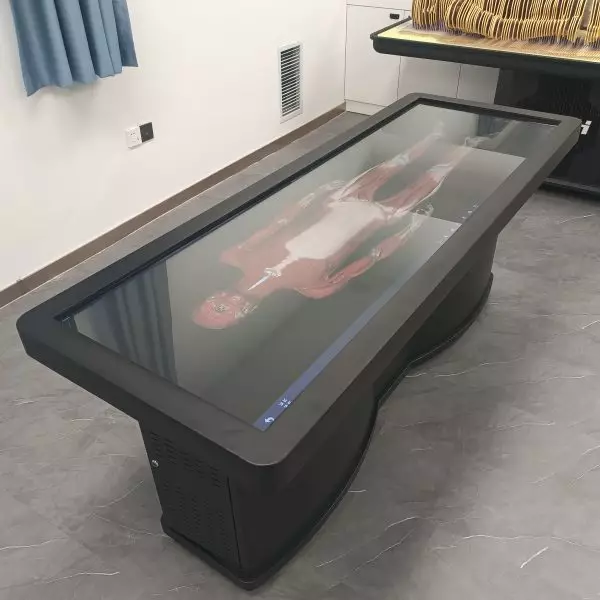
Traditional anatomy education faces significant obstacles, from limited cadaver availability to the ethical concerns surrounding specimen use. The DIGIHUMAN anatomy table for medical students provides the perfect alternative, offering detailed 3D models of over 6,000 anatomical structures without these limitations. Unlike physical cadavers that can only be used once, our platform allows unlimited virtual dissections, enabling students to revisit complex systems like the brachial plexus or coronary arteries as often as needed. This anatomy table for medical students not only solves resource issues but enhances learning through interactive exploration that textbooks simply cannot match.
Interactive Features That Accelerate Learning
What makes the DIGIHUMAN anatomy table for medical students truly exceptional is its depth of functionality. Students can isolate specific systems, rotate structures in 3D space, and even compare normal anatomy with pathological examples. The integration of 1,700+ CT and MRI images with cadaveric data provides multiple perspectives on each anatomical structure, while real dissection videos demonstrate proper techniques. Our system includes comprehensive testing resources with thousands of questions to reinforce knowledge, ensuring students don’t just memorize but truly understand spatial relationships. The platform’s compatibility with various devices means this anatomy table for medical students can be accessed anywhere, from lecture halls to dorm rooms, making study sessions more productive than ever before.
Global Recognition in Medical Training
The effectiveness of the DIGIHUMAN anatomy table for medical students is demonstrated by its adoption in over 40 countries across six continents. Medical schools appreciate how our solution standardizes anatomical education while reducing long-term costs associated with cadaver labs. The system’s multilingual support makes it ideal for international programs, and its AR/VR compatibility future-proofs institutional investments. As competency-based medical education becomes the global standard, our anatomy table for medical students provides the perfect tool for objective skill assessment, allowing educators to track student progress through detailed performance metrics on virtual dissection tasks.
Conclusion: The Future of Medical Training Is Here
The DIGIHUMAN anatomy table for medical students represents more than just technological innovation—it’s a complete reimagining of how anatomy should be taught in the 21st century. By combining ethical advantages with superior educational outcomes, our solution is setting new standards in medical training worldwide. For institutions ready to provide their students with the most advanced anatomical education available, we offer the tools to train competent, confident future physicians. Discover how our anatomy table for medical students can transform your program by contacting our team today.

MEDICA 2026 in Germany: What Medical Training Technology Looks Like This Year
Medical schools are being asked to train more people than they can teach. The World Health Organization's first annual health...

What Is Augmented Reality Medical Training
Medical schools have a quiet math problem. A class of thirty students often shares a single cadaver, and the numbers...

Hierarchical Structure of Anatomy: Understanding the Human Body From Systems to Detailed Structures
The human body is a complex organization built through multiple levels of structure. From large body systems to tiny anatomical...