
The Evolution of Anatomy Labs
At DIGIHUMAN, we are committed to advancing medical education through innovative technological solutions. As a leading provider of virtual anatomy tables, we understand the challenges faced by medical institutions worldwide, such as the scarcity of cadavers, ethical concerns, and the need for more interactive learning tools. In this article, we explore how virtual anatomy tables are reshaping anatomy education and why our products stand out in the market.
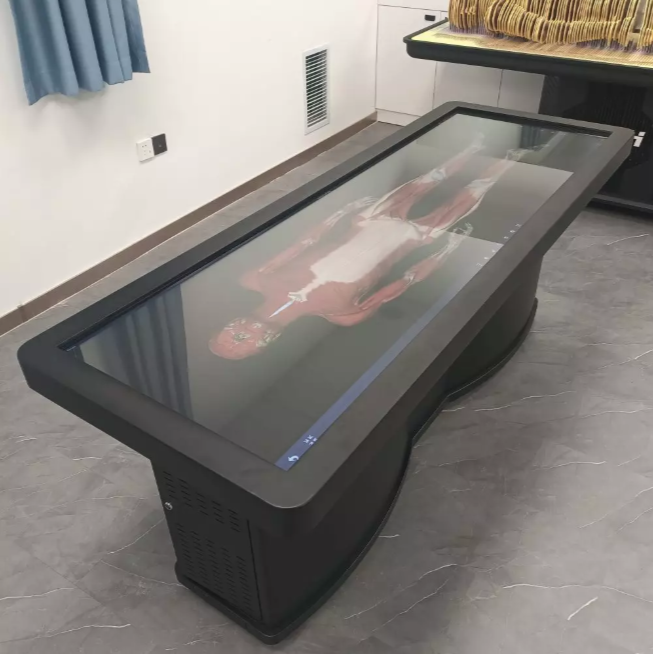
Enhancing Curriculum with Scalable Digital Resources
Beyond the core table hardware, we provide a continuously updated digital library that is integral to our solution. This includes high-definition 3D models across all body systems, thousands of labeled structures, and curated content like clinical case studies and dissection video tutorials. This scalable resource eliminates the issue of deteriorating specimens and ensures that every student cohort has access to a consistent, high-quality anatomical database. Educators can leverage this vast repository to design standardized assessments, create repeatable lab exercises, and ensure that learning objectives are uniformly met across different campuses or training sessions.
Integrating Virtual Tables into Diverse Teaching Frameworks
A key advantage of the DIGIHUMAN virtual anatomy table is its adaptability to various pedagogical models. It can serve as the centerpiece of a fully digital lab, be used in a blended learning environment to preview cadaveric structures, or function as a standalone review station for students. Educators can create customized lesson plans, bookmark specific views or dissections, and seamlessly switch between systemic, regional, and sectional anatomy modes. This flexibility allows institutions to tailor the technology to their specific curriculum needs, whether for large lecture demonstrations, small group problem-based learning, or individual self-paced study, maximizing the return on their educational investment.
The Advantages of Virtual Anatomy Tables in Modern Medical Education
Virtual anatomy tables offer a sustainable and effective alternative to traditional cadaver-based learning. These tables utilize real human body data to create detailed 3D anatomical models, allowing students to perform virtual dissections without the limitations of physical specimens. At DIGIHUMAN, our virtual anatomy tables feature over 6,000 anatomical structures, real dissection videos, and interactive quizzes. This approach not only addresses the shortage of cadavers but also provides a safe, repeatable, and comprehensive learning experience. Institutions using our tables report improved student engagement and knowledge retention, making them a valuable investment for medical schools and training centers.
Why Choose DIGIHUMAN Virtual Anatomy Tables
Our virtual anatomy tables are designed with both educators and learners in mind. The HD Digihuman Virtual Anatomy Table. Built on real human cross-sectional data with precision ranging from 0.1mm to 1mm, our tables ensure anatomical accuracy and clarity. Additionally, we offer flexible purchasing options with low minimum order quantities—starting from just one set—making it easier for institutions to adopt this technology without inventory pressure. As a company with our own hardware factory and R&D team, we ensure every product meets international standards, including CE and FCC certifications.
Conclusion
Virtual anatomy tables represent the future of anatomy education, combining technology with pedagogy to create immersive learning environments. At DIGIHUMAN, we are proud to support medical institutions globally with reliable, high-quality virtual dissection solutions. If you are considering integrating virtual anatomy tables into your curriculum, we invite you to explore our product range and experience the DIGIHUMAN difference.

Revolutionizing Medical Education: Understanding the True Value and Human Anatomy VR Price
As pioneers in advanced medical virtualization, we at DIGIHUMAN have witnessed a fundamental shift in how anatomical knowledge is imparted...

Revolutionizing Medical Education: Why Human Anatomy VR for Institutions is Essential
As medical education evolves, the need for innovative and highly accurate teaching tools has never been greater. For years, educators...
Transforming Medical Education: The Power of Anatomy Physiology VR
In the specialized field of medical education, the foundational study of human anatomy and physiology has always been paramount. However,...