
Decoding Anatomical Terminology
In the detailed study of human anatomy, precise terminology is the cornerstone of clear communication and understanding. At DIGIHUMAN, we support medical educators in moving beyond rote memorization by providing tools that visually demonstrate complex anatomical concepts. A common question that arises in musculoskeletal studies is, “what is protraction in anatomy?” This article will clearly define this term, illustrate its clinical relevance, and explain how our digital teaching solutions can make mastering such concepts more intuitive and effective for students.
Defining Protraction and Its Role in the Body
So, What is protraction in anatomy? In precise anatomical terms, protraction is a linear, forward (anterior) movement of a body part in the transverse plane. It is the opposite motion of retraction, which is a backward (posterior) movement. The most classic examples involve the scapula (shoulder blade) and the mandible (jaw). Scapular protraction occurs when the shoulder is pushed forward, as in a punching motion, causing the scapula to move away from the vertebral column. Mandibular protraction is the forward thrust of the lower jaw. Understanding these movements is crucial for professionals in fields like physical therapy, orthopedics, and sports medicine, as deviations from normal movement patterns can indicate or lead to injury. Our Digihuman Anatomy System, with its interactive 3D models, allows students to isolate these structures and animate protraction and retraction, transforming an abstract definition into a dynamic, visual understanding.
From Concept to Application: Teaching with Digital Tools
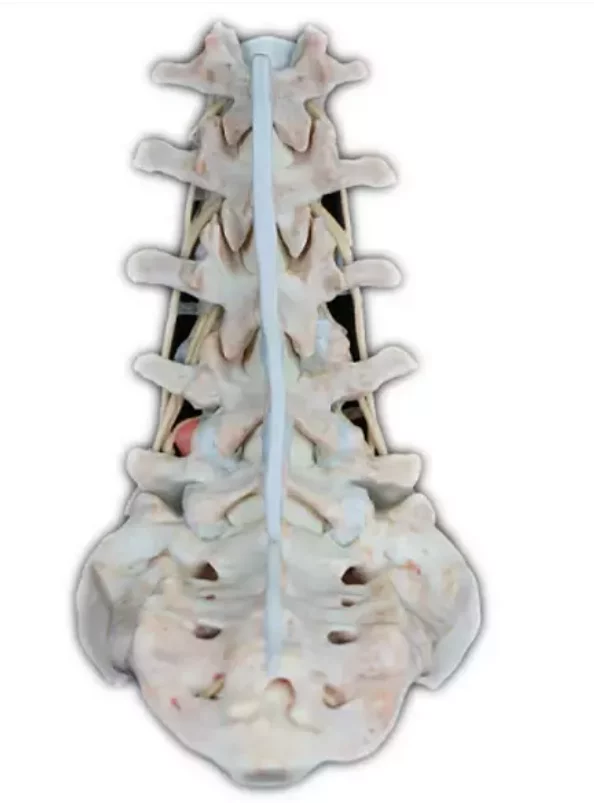
Traditional methods of teaching anatomical movements like protraction often rely on static 2D diagrams, which can struggle to convey the three-dimensional, dynamic nature of these actions. This is where digital visualization becomes a powerful pedagogical asset. The Digihuman Virtual Anatomy Table enables educators to present a fully manipulable 3D human model. An instructor can select the shoulder girdle, for instance, and visually demonstrate the path of scapular protraction, isolating the involved muscles such as the serratus anterior and pectoralis minor. Furthermore, our Digihuman 3D Printing Models, such as the detailed shoulder or skull models, provide tangible, physical references that complement the digital experience. By integrating these tools, educators can bridge the gap between theoretical knowledge and practical, functional anatomy, ensuring students grasp not just the “what,” but the “how” and “why.”
Why DIGIHUMAN is a Trusted Partner for Anatomy Education
Choosing the right educational technology partner is vital. DIGIHUMAN stands out by combining technological innovation with rigorously vetted content. Our software library, developed in collaboration with leading medical institutions and reviewed by the Chinese Society for Anatomical Sciences’ Committee of Experts, guarantees anatomical accuracy. For concepts like protraction, this means every muscle origin, insertion, and line of pull is correctly represented. As a factory-direct manufacturer and exporter, we offer competitive pricing for our all-in-one systems, virtual reality labs, and 3D printed models, with low minimum order quantities to suit institutional needs. Our products, holding CE and FCC certifications, are trusted by medical schools in over 50 countries. We empower educators to deliver complex lessons with clarity, making nuanced topics accessible and preparing students for clinical success.
Conclusion
Mastering anatomical terminology, including understanding what protraction is in anatomy, is fundamental for any medical student. At DIGIHUMAN, we are dedicated to enhancing this learning journey through state-of-the-art visualization tools that are accurate, interactive, and aligned with modern pedagogical needs. We invite medical institutions and educators to explore our suite of products to discover how we can help elevate the understanding of anatomy in your classrooms and laboratories.

Revolutionizing Medical Education: Understanding the True Value and Human Anatomy VR Price
As pioneers in advanced medical virtualization, we at DIGIHUMAN have witnessed a fundamental shift in how anatomical knowledge is imparted...

Revolutionizing Medical Education: Why Human Anatomy VR for Institutions is Essential
As medical education evolves, the need for innovative and highly accurate teaching tools has never been greater. For years, educators...
Transforming Medical Education: The Power of Anatomy Physiology VR
In the specialized field of medical education, the foundational study of human anatomy and physiology has always been paramount. However,...