
As professionals dedicated to providing world-class educational solutions through wholesale and export, we at DIGIHUMAN are constantly engaging with the core principles that define effective medical training. The fundamental relationship between structure and function in the human body is the bedrock of clinical competence. Yet, a deceptively simple question often surfaces in academic circles, and it holds profound implications for how we structure our curricula and invest in our educational infrastructure: is dissection anatomy or physiology?
We understand this is not merely an academic riddle; it is a point of departure for evaluating the efficacy, ethics, and efficiency of your institution’s approach to medical science. Our goal is to synthesize clarity on this topic while presenting the modern, high-definition tools that allow institutions to master both domains simultaneously.
Dissecting the Definitions: Anatomy vs. Physiology
To answer the central question, we must first establish the clear distinction between the two disciplines.
Anatomy is the study of structure. It deals with the identification, nomenclature, and spatial relationships of all the body’s physical components, from microscopic cells to macroscopic organ systems. A student engaged in anatomical study is learning what is present and where it is located.
Physiology, conversely, is the study of function. It explores how the body parts work, individually and in concert, to maintain life. A student of physiology is learning about metabolic processes, electrical signaling, regulatory feedback loops, and dynamic processes.
The disciplines are inseparable, but traditionally, the practical act of dissection has belonged squarely within the realm of anatomy.
Understanding the Debate: Is Dissection Anatomy or Physiology?
When we examine the process of dissection, the answer becomes clear: the method is inherently anatomical. Dissection is a tactile, visual, and investigative method used to systematically expose, isolate, and identify the structures of a biological specimen. It is the gold standard for teaching gross anatomy and understanding the three-dimensional reality of the human body.
However, to stop there would be to miss the essential pedagogical value of the process. While dissection may be the tool of anatomical study, it is the crucial bridge to understanding physiology. We learn about muscles (anatomy) by dissecting them, but we only truly understand them when we recognize that their orientation and attachment points dictate the function of leverage and movement (physiology). Seeing the structures in place is the only way to logically extrapolate their purpose. Therefore, although the technique is rooted in structure, its ultimate educational yield is a complete mastery of structure-function relationships, thereby supporting both domains.
The question of is dissection anatomy or physiology? highlights the need for educational tools that effectively merge these two concepts, providing the necessary spatial context without compromising quality or access.
The Imperative for Change in Institutional Training
For large-scale educational providers, hospitals, and medical schools that rely on our services for wholesale equipment, the delivery of high-quality anatomical education faces persistent challenges:
- Scarcity and Cost: Cadaver specimens are increasingly difficult and expensive to procure, store, and maintain, leading to high long-term operational costs.
- Ethics and Safety: Traditional methods carry ethical considerations and expose students and staff to hazardous preservatives like formaldehyde.
- Repetition and Accessibility: Physical specimens offer a single, one-time view. Students cannot practice procedures repeatedly or explore the same structures from multiple angles once the specimen is altered.
- Integration of Clinical Data: Traditional labs often struggle to integrate actual clinical imaging (CT, MRI) with the dissected specimen, leaving a gap in translational understanding.
It is our responsibility, as providers of advanced educational technology, to overcome these limitations. We must ensure that our institutional partners, who serve thousands of aspiring medical professionals, have access to budget-friendly, high-precision tools that are scalable across their training programs.
DIGIHUMAN: Revolutionizing Anatomical Visualization
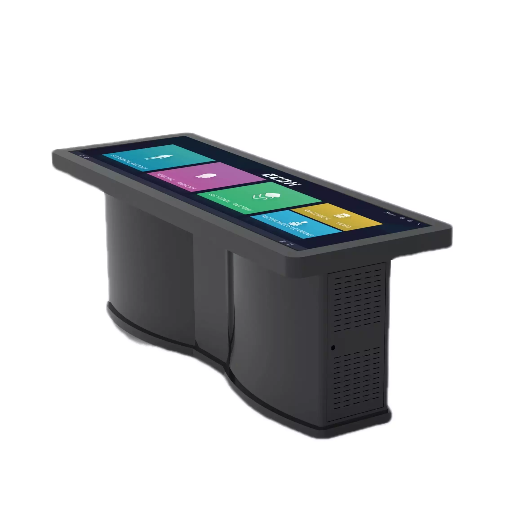
This is precisely why we developed the DIGIHUMAN Virtual Anatomy Table. Recognizing the global demand from our wholesale and export partners for a superior, sustainable solution, we engineered a platform that not only solves the logistical problems of the traditional lab but actively enhances the learning experience.
The DIGIHUMAN Virtual Anatomy Table is a complete software and hardware integration that utilizes world-leading Ultra High Definition (UHD) data to create high-resolution, interactive 3D anatomical models. This advanced platform is the future of anatomical education, offering unparalleled precision:
- Virtual Dissection and Repetition: Students can manipulate the 3D models—zooming, rotating, and virtually “dissecting” structures like nerves and blood vessels—repeatedly and without consequence. The touch control operation allows for cutting and observation from different angles and layers, a capability impossible with a single physical specimen.
- Precision and Detail: The UHD data displays fine structures that are often obscured or invisible in traditional dissection. Furthermore, our systems are equipped with over 1700 corresponding CT and MRI clinical images based on tomographic specimens, effectively bridging the gap between classroom anatomy and real-world diagnostic imaging.
- Comprehensive Resources: Beyond the anatomy models, the tables integrate real dissection videos, anatomy animations, and a large repository of test questions, enhancing knowledge consolidation and retention.
- Scalable and Safe: By replacing physical cadavers with virtual simulations, the DIGIHUMAN table eliminates ethical concerns and exposure to toxic preservatives, while drastically reducing the long-term expenses associated with lab maintenance, making it ideal for institutions operating on a wholesale budget model.
For our institutional clients worldwide, the DIGIHUMAN Virtual Anatomy Table represents a strategic investment in the quality, consistency, and future-readiness of their medical programs. We believe that by using tools that allow simultaneous, repeated study of both structure and inferred function, we can put the debate of is dissection anatomy or physiology? to rest. The answer is that modern training must master both, and we provide the platform to do it.
We are proud to serve over 40 countries with reliable, multi-functional, and budget-friendly educational exports. We welcome contact from institutions looking to transition their anatomy programs into the digital age.

Revolutionizing Medical Education: Understanding the True Value and Human Anatomy VR Price
As pioneers in advanced medical virtualization, we at DIGIHUMAN have witnessed a fundamental shift in how anatomical knowledge is imparted...

Revolutionizing Medical Education: Why Human Anatomy VR for Institutions is Essential
As medical education evolves, the need for innovative and highly accurate teaching tools has never been greater. For years, educators...
Transforming Medical Education: The Power of Anatomy Physiology VR
In the specialized field of medical education, the foundational study of human anatomy and physiology has always been paramount. However,...