
We at DIGIHUMAN are proud to present the digihuman VR anatomy teaching system. As a global innovator in virtual reality anatomy education, we focus on building immersive, collaborative and truly modern learning environments for medical institutions, universities, and science and education venues. Our mission is simple: We want virtual reality anatomy education to become more engaging, more spatially accurate, more interactive, and more accessible than traditional cadaver-based training.
What Makes DIGIHUMAN Different
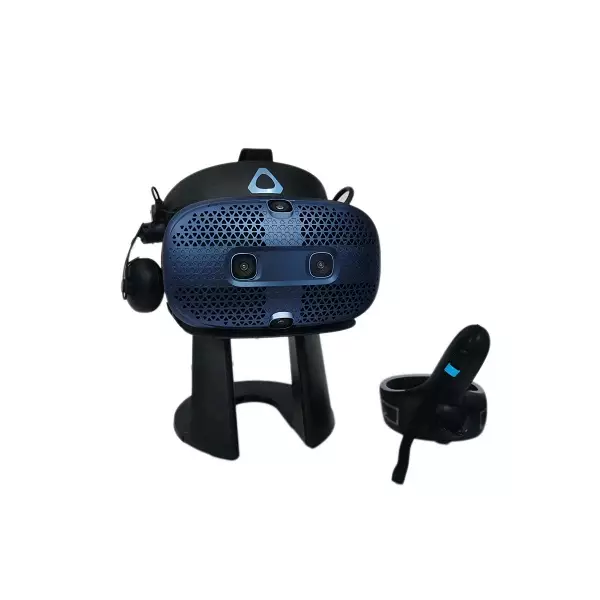
Our Digihuman 3D anatomy VR system is the only virtual reality anatomy teaching product based on 3D reconstruction technology. We bring authentic body structures into a digitally immersive world so that students and professionals can study, observe, rotate, examine, and compare anatomy in a way that traditional textbooks or 2D screens cannot achieve. This is exactly why more educators are turning to virtual reality anatomy education with DIGIHUMAN. We offer a learning experience that is no longer restricted by ethical limitations, availability of donated bodies, or the high cost of maintaining cadaver labs. Our VR Headset, Vive glasses, and hand Controllers form the hardware base, while our proprietary software powers the content.
Collaborative Learning in a VR Classroom
We believe virtual reality anatomy education should not be a lonely activity. Our multi-person collaborative class mode allows teachers and students to enter the same VR scene together. They can point, highlight, annotate, or even quiz each other in real time. This transforms anatomy lessons into team-based exploration rather than passive theory. We integrated 8 main systems into DIGIHUMAN: wizard system, multimedia system, graphics and image system, voice system, puzzle system, practices system, UI system, and interactive system. These systems allow each lesson to bring motion, narrative, exploration, and problem-solving into the core of virtual reality anatomy education.
Immersive, enjoyable, and scientifically valuable
Studies show that virtual reality anatomy education is more motivating, memorable, and spatially meaningful than paper diagrams. Our users tell us that our 3D interactive organs feel “alive” to study. They constantly zoom in, dissect, isolate, and view tissue in 360° motion. We are proud that DIGIHUMAN is rated as more interesting, more enjoyable, and more useful for understanding spatial relationships than traditional tools.
Conclusion
We believe the future of medical learning will move toward digital immersion. With DIGIHUMAN, virtual reality anatomy education is no longer science fiction. It is practical, proven, and ready for every classroom. We welcome institutions who want to introduce breakthrough innovation into anatomy training to experience DIGIHUMAN VR for themselves.

Revolutionizing Medical Education: Understanding the True Value and Human Anatomy VR Price
As pioneers in advanced medical virtualization, we at DIGIHUMAN have witnessed a fundamental shift in how anatomical knowledge is imparted...

Revolutionizing Medical Education: Why Human Anatomy VR for Institutions is Essential
As medical education evolves, the need for innovative and highly accurate teaching tools has never been greater. For years, educators...
Transforming Medical Education: The Power of Anatomy Physiology VR
In the specialized field of medical education, the foundational study of human anatomy and physiology has always been paramount. However,...